
AQUILA Endpoint Agent integrates an asset governance capability that provides real‑time visibility into endpoint configurations, software inventories, and operational health — enabling IT and security teams to detect drift, enforce standards, and maintain a unified, accurate view of the endpoint fleet.


![[interface] image of a computer showcasing educational software (for a edtech)](https://cdn.prod.website-files.com/6954708495d04649d41c9ddd/69ae4099b54d2f627e80f29a_Asset%20Management%203.jpeg)

Modern enterprises struggle with endpoint visibility because:
• Asset inventories are scattered across multiple tools
• CMDBs are outdated or incomplete
• Patch management systems lack behavioral context
• Configuration drift goes undetected
• Software inventories are inconsistent across teams
• Security and IT operate from different data sources
This fragmentation creates operational risk:
• SOC teams lack accurate endpoint context
• IT teams cannot enforce configuration standards
• Compliance teams cannot validate control maturity
• Vulnerability management lacks real‑time visibility
• Incident response is slowed by incomplete asset data
AQUILA Endpoint Agent corrects this by embedding asset governance directly into the endpoint architecture, where telemetry, configuration, and behavior converge.
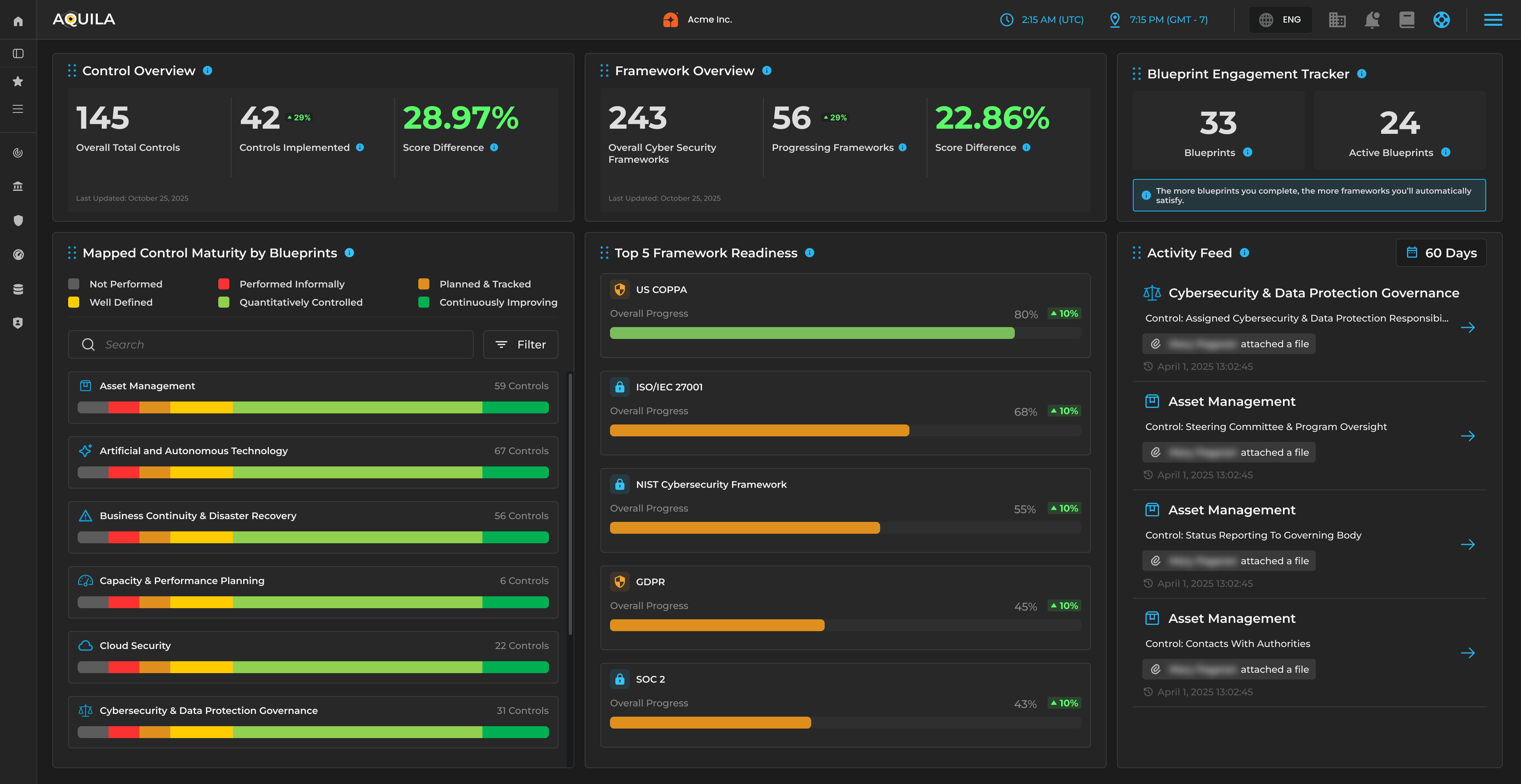
AQUILA’s asset management module provides:
• Real‑time visibility into installed software
• Continuous monitoring of configuration states
• Detection of drift from baseline
• Endpoint health and performance insights
• Integration with CMDB and patch management systems
• Unified asset inventory across the entire fleet
Because asset intelligence is collected locally, it is accurate, immediate, and aligned with the endpoint’s operational reality.
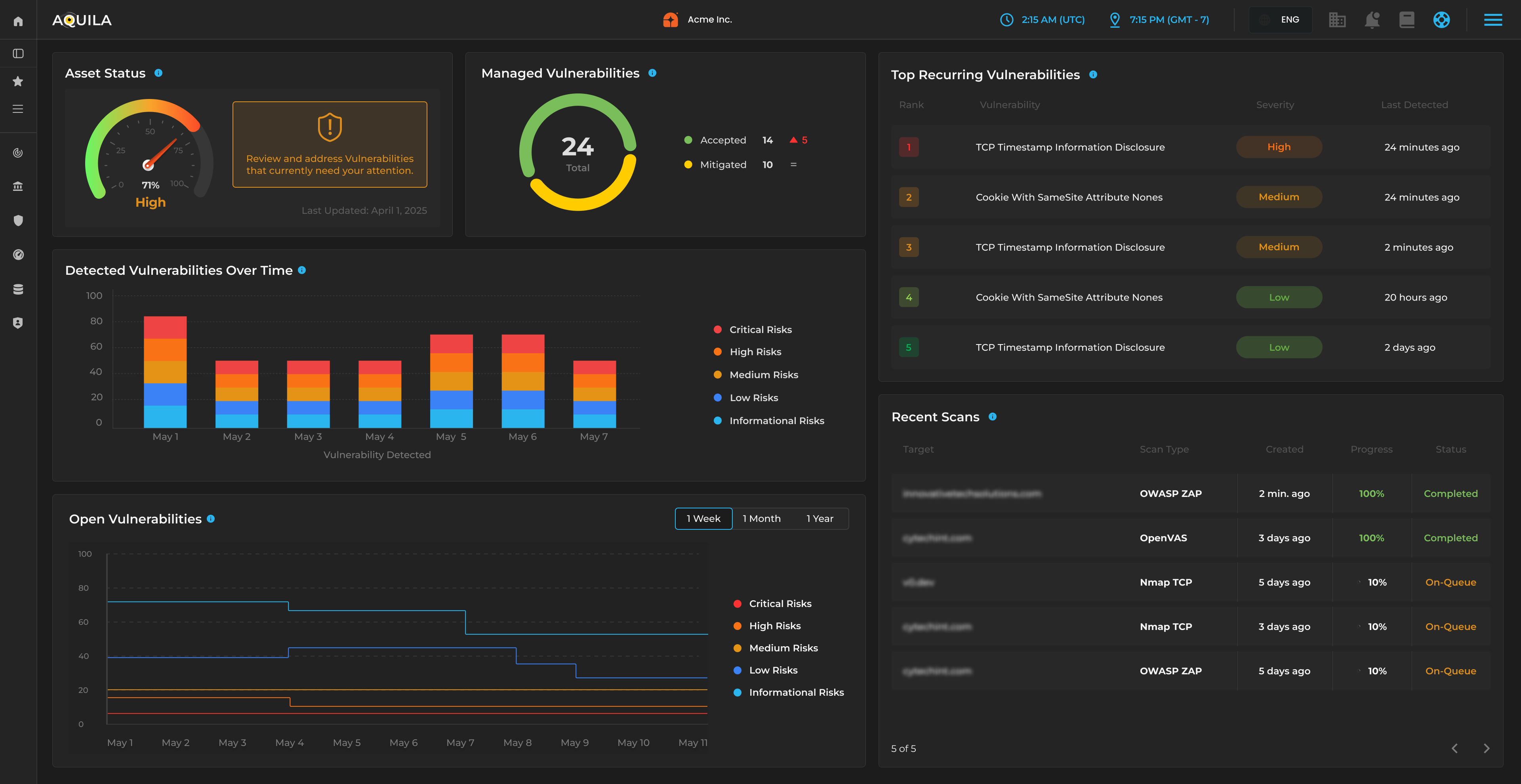
AQUILA Endpoint Agent applies the C4I pillars directly to asset governance:
Command: Local enforcement of configuration standards, baseline requirements, and governance policies.
Control: Execution of corrective actions — configuration adjustments, remediation prompts, or automated enforcement — directly on the device.
Communications: Structured asset telemetry streamed to AQUILA C4I Core OS for enterprise‑wide visibility.
Computers: Local evaluation of software versions, configuration drift, and asset posture — even offline.
Intelligence: Integration with VDR, EDR, UEBA, and compliance modules to correlate asset state with risk, behavior, and governance requirements.
This alignment ensures that asset management is continuous, contextual, and operationally coherent across the endpoint fleet.
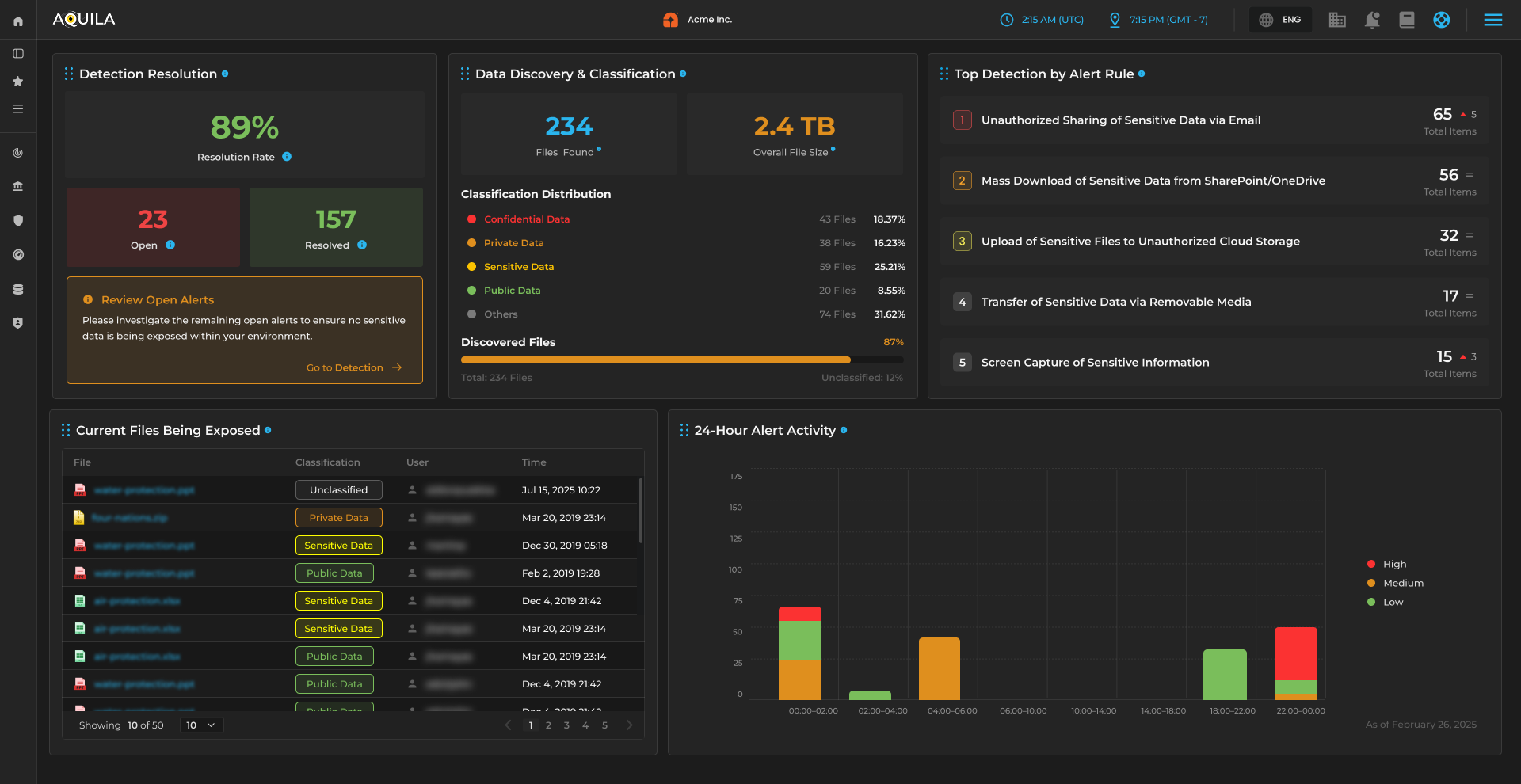
AQUILA Asset Management shares the same telemetry engine as EDR, VDR, DLP, UEBA, RBI, Local SOAR, AI‑driven monitoring, and Compliance Management.
This allows asset intelligence to be correlated with:
• Vulnerability exposure
• User behavior
• Process execution
• Data movement
• Identity signals
• Endpoint posture
• Compliance requirements
Traditional asset tools cannot correlate inventory with this level of endpoint intelligence.
AQUILA continuously monitors OS version and patch level, installed applications and packages, configuration baselines, security settings, encryption status, endpoint health metrics, unauthorized software installation. and deviations from approved standards.
When drift occurs, the agent can:
• Notify the user
• Enforce corrective actions
• Capture evidence
• Escalate to IT or SOC
• Trigger automated remediation
• Synchronize updates with governance systems
Asset governance becomes self‑correcting, not reactive.
AQUILA provides:
• Complete software inventory per device
• Version tracking and update visibility
• Detection of deprecated or vulnerable components
• Endpoint performance metrics
• Configuration health indicators
This enables IT and security teams to:
• Identify outdated or risky software
• Enforce standard operating environments
• Validate patch and update compliance
• Maintain consistent endpoint posture
• Support incident response with accurate asset data
Asset intelligence becomes a strategic operational capability, not a static list.
AQUILA Asset Management integrates with:
• CMDB platforms
• Patch management systems
• Configuration management tools
• Governance and compliance systems
• SOC and SIEM workflows
This ensures that:
• Asset data is actionable
• Configuration standards are enforceable
• Governance requirements are validated
• IT and security operate from a single source of truth
Asset management becomes part of a unified operational ecosystem, not a siloed function.
When asset anomalies occur, AQUILA can:
• Enforce configuration corrections
• Block unauthorized software
• Isolate the device if required
• Terminate risky processes
• Trigger guided remediation
• Escalate to IT or SOC workflows
These actions execute locally, ensuring immediate enforcement. Asset management becomes both a preventive and responsive capability.
With AQUILA Asset Management, organizations gain:
1. Real‑time, endpoint‑native asset visibility
Accurate inventories and configuration data without manual effort.
2. Continuous drift detection and enforcement
Endpoints remain aligned with governance and security standards.
3. Unified asset intelligence across nine endpoint functions
Asset data is correlated with behavior, risk, and posture.
4. Reduced operational friction
IT and security operate from the same authoritative data source.
5. A single source of truth for endpoint governance
All asset intelligence flows into AQUILA C4I Core OS.