
CRAM™ replaces subjective scoring and periodic assessments with a continuous, intelligence‑driven risk methodology that unifies governance, exposure, behavior, and operational context into a single, measurable risk model.

![[interface] image of a computer showcasing educational software (for a edtech)](https://cdn.prod.website-files.com/6954708495d04649d41c9ddd/69af3e7c2c9d0ede5798add4_CRAM%204.jpeg)

Traditional risk assessments fail because they rely on:
• Qualitative scoring (“High / Medium / Low”)
• Periodic reviews (quarterly or annual)
• Manual interviews and spreadsheets
• Siloed data sources
• Inconsistent interpretation
• No connection to real‑time telemetry
• No correlation between controls, exposure, and behavior
This creates structural failures:
• Risk becomes a documentation exercise
• Leadership receives outdated or incomplete information
• SOC and governance teams operate from different realities
• Risk decisions lack measurable justification
• Remediation is reactive, not strategic
CRAM™ corrects this by transforming risk from a static report into a continuous operational system.
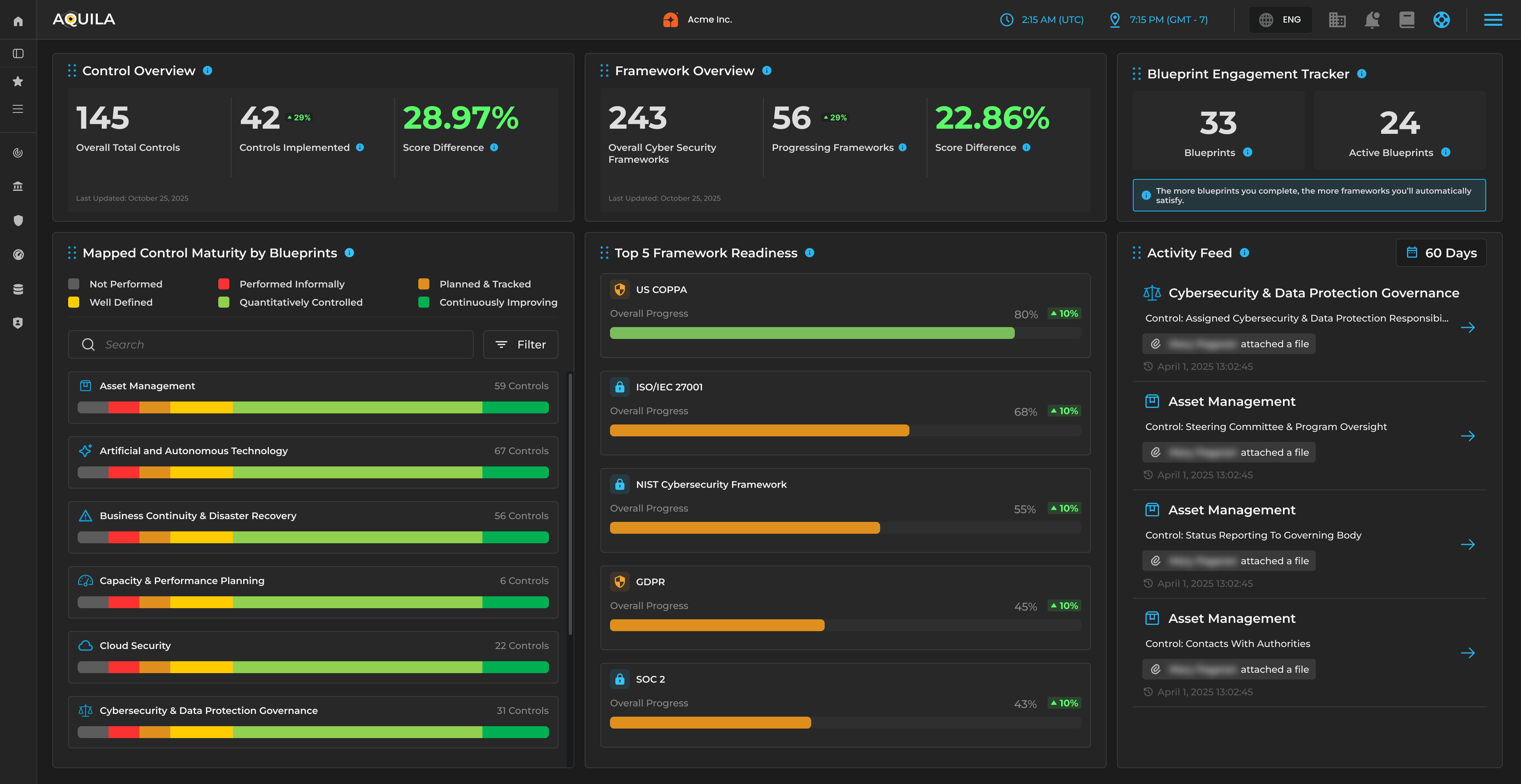
CRAM™ evaluates risk using real‑time telemetry from AQUILA C4I, including:
• Endpoint exposure (VDR)
• Behavioral anomalies (UEBA)
• Data movement (DLP)
• Identity misuse
• Configuration drift
• Vulnerability chains
• Compliance state
• Asset posture
• Browser isolation events
• AI‑detected anomalies
Instead of subjective scoring, CRAM™ produces:
• Measurable risk indicators
• Contextual risk narratives
• Exposure chains
• Control maturity insights
• Prioritized remediation paths
• Continuous risk posture updates
Risk becomes quantified, contextual, and operationally aligned.
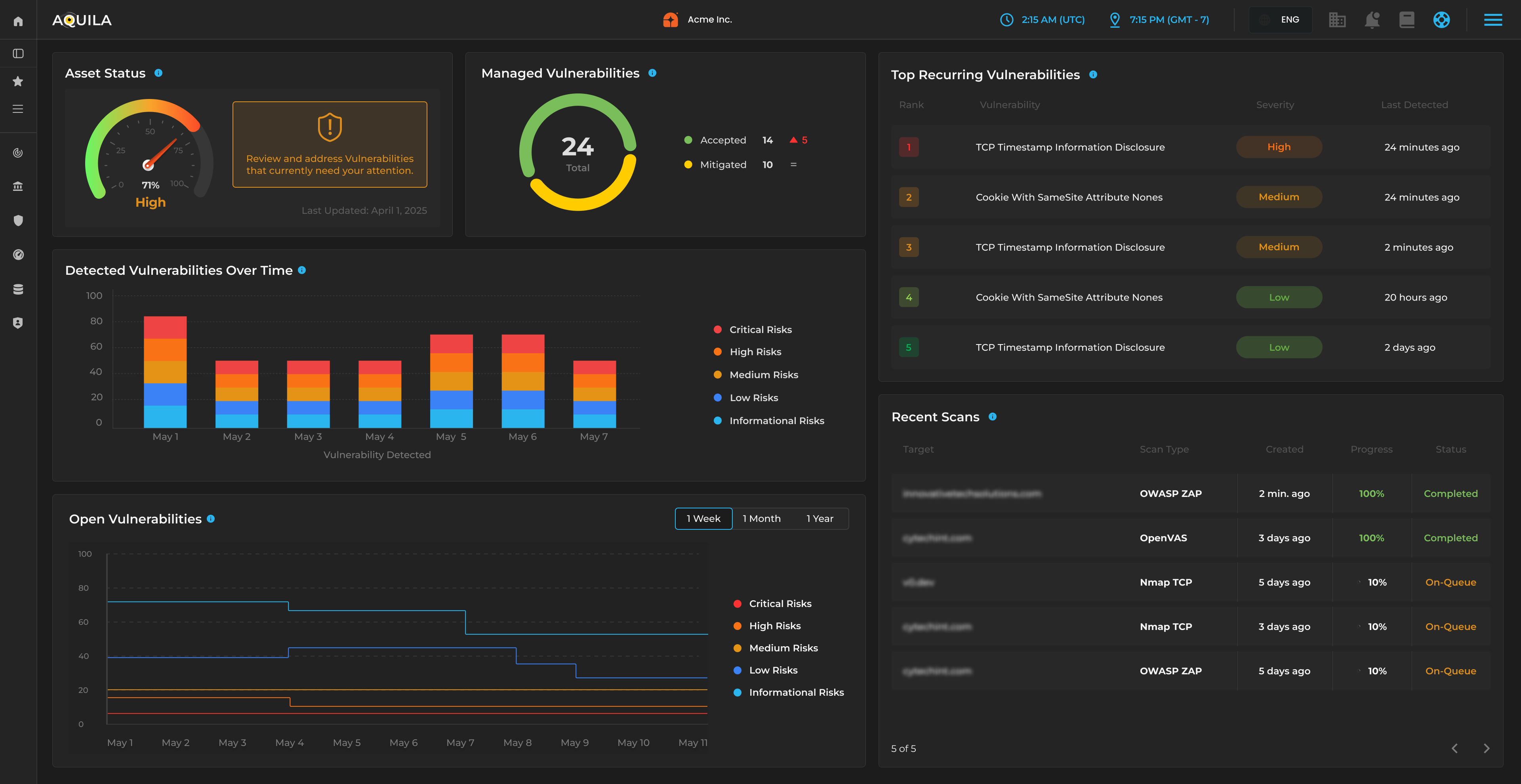
CRAM™ operates as the risk intelligence layer of the AQUILA C4I ecosystem. AQUILA applies the C4I pillars directly to risk:
Command: CRAM™ provides a unified risk picture for executive and technical leadership.
Control: CRAM™ maps risk to actionable remediation paths and orchestrates enforcement through AQUILA EPA.
Communications: CRAM™ synchronizes risk intelligence across governance, SOC, IT, and compliance teams.
Computers: CRAM™ uses AQUILA’s distributed analytics to evaluate risk continuously.
Intelligence: CRAM™ correlates exposure, behavior, identity, and governance signals to produce meaningful risk insights.
This alignment ensures that risk is operational, measurable, and command‑driven, not theoretical.
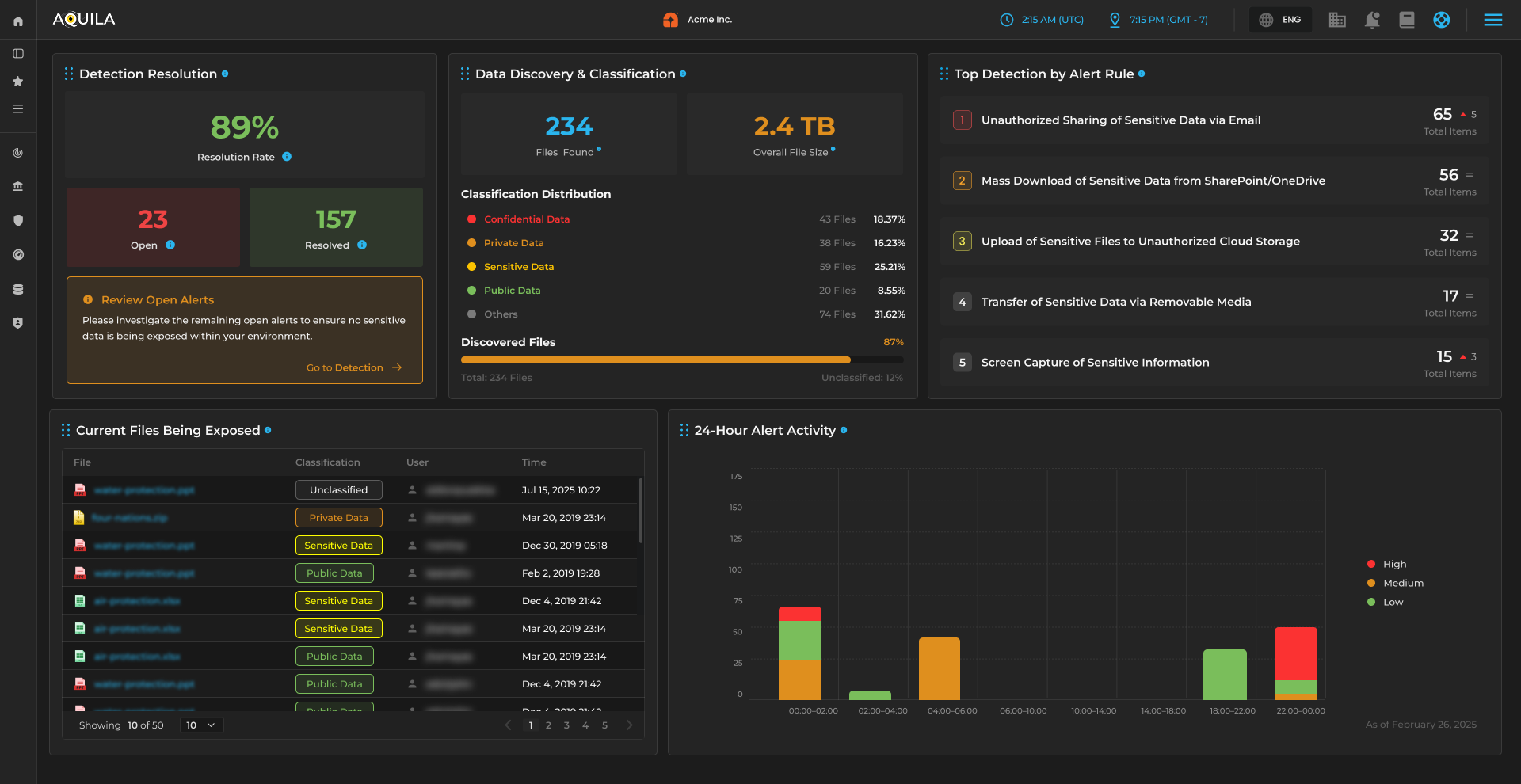
CRAM™ receives structured compliance signals from:
• AQUILA Endpoint Agent (EPA)
• EDR
• VDR
• DLP
• UEBA
• RBI
• AI‑Driven Monitoring
• Compliance Agent
• Asset Management
• AQUILA C4I Core OS: identity governance, cloud posture, data governance, human‑layer intelligence, compliance state, and NG‑SIEM narratives.
Because telemetry is normalized and contextualized at the source, CRAM™ evaluates risk with precision and clarity.
CRAM™ correlates:
• Vulnerabilities + behavior
• Data movement + identity signals
• Configuration drift + exposure
• Compliance violations + endpoint posture
• Browser isolation events + user activity
• AI anomalies + process execution
• Asset state + governance requirements
This enables CRAM™ to detect:
• High‑risk exposure chains
• Identity‑driven attack paths
• Insider threat indicators
• Misconfigurations with real impact
• Vulnerabilities under active exploitation
• Governance drift with operational consequences
Traditional risk assessments cannot correlate risk with this level of endpoint intelligence.
CRAM™ constructs risk narratives such as:
• “A high‑risk vulnerability exists on a device exhibiting abnormal identity behavior and repeated DLP policy violations.”
• “A configuration drift event created an exposure chain that aligns with known lateral movement patterns.”
• “A user with elevated privileges triggered multiple AI‑detected anomalies and accessed sensitive data outside baseline behavior.”
Narratives provide:
• Context
• Sequence
• Intent
• Impact
• Recommended remediation
Risk becomes explainable, not abstract.
CRAM™ evaluates:
• Likelihood based on behavior and exposure
• Impact based on data sensitivity and identity role
• Exploitability based on vulnerability state
• Control maturity based on UCB mapping
• Operational context based on endpoint posture
This produces:
• Dynamic risk scores
• Prioritized remediation paths
• Real‑time risk posture
• Measurable risk reduction over time
Risk becomes quantified and actionable.
CRAM™ integrates directly with:
• Unified Compliance Blueprint (UCB)
• Mapping risk to control maturity
• Identifying governance gaps
• Validating compliance impact
• Compliance Agent
• Enforcing corrective actions
• Validating remediation
• Capturing evidence
Risk becomes governance‑aligned, not isolated.
When CRAM™ identifies a high‑risk scenario, AQUILA can:
• Isolate the device
• Terminate malicious processes
• Enforce configuration corrections
• Block risky behavior
• Trigger guided remediation
• Escalate to SOC workflows
These actions execute locally, ensuring immediate mitigation.
Risk becomes both a detection signal and a response trigger.
With CRAM™, organizations gain:
1. Continuous, intelligence‑driven risk assessment
Risk is evaluated in real time, not quarterly.
2. Quantified, contextual risk insights
Risk is tied to behavior, exposure, and governance.
3. Unified risk posture across the enterprise
All risk intelligence flows into AQUILA C4I Core OS.
4. Prioritized remediation paths
Effort is focused where it reduces risk the most.
5. A single source of truth for cyber risk
Risk becomes measurable, explainable, and operational.