
AQUILA Endpoint Agent integrates a Remote Browser Isolation capability that renders untrusted web content in isolated environments, preventing malware, phishing, and drive‑by exploits from ever reaching the endpoint — without degrading user experience.


![[interface] image of a computer showcasing educational software (for a edtech)](https://cdn.prod.website-files.com/6954708495d04649d41c9ddd/69ae185a6b0c0e20b1b8e784_RBI%202.jpeg)
Modern attacks increasingly originate from the browser malicious JavaScript, compromised websites, phishing pages, drive‑by exploit kits, weaponized ads, credential harvesting portals, and browser‑based privilege escalation.
Traditional defenses struggle because:
• URL filtering is signature‑dependent
• Proxies lack endpoint context
• EDR sees the result, not the cause
• DLP sees data movement, not the threat
• Users can bypass controls
• Zero‑day browser exploits bypass patch cycles
AQUILA Endpoint Agent corrects this by embedding browser isolation directly into the endpoint architecture, ensuring that untrusted content never executes locally.
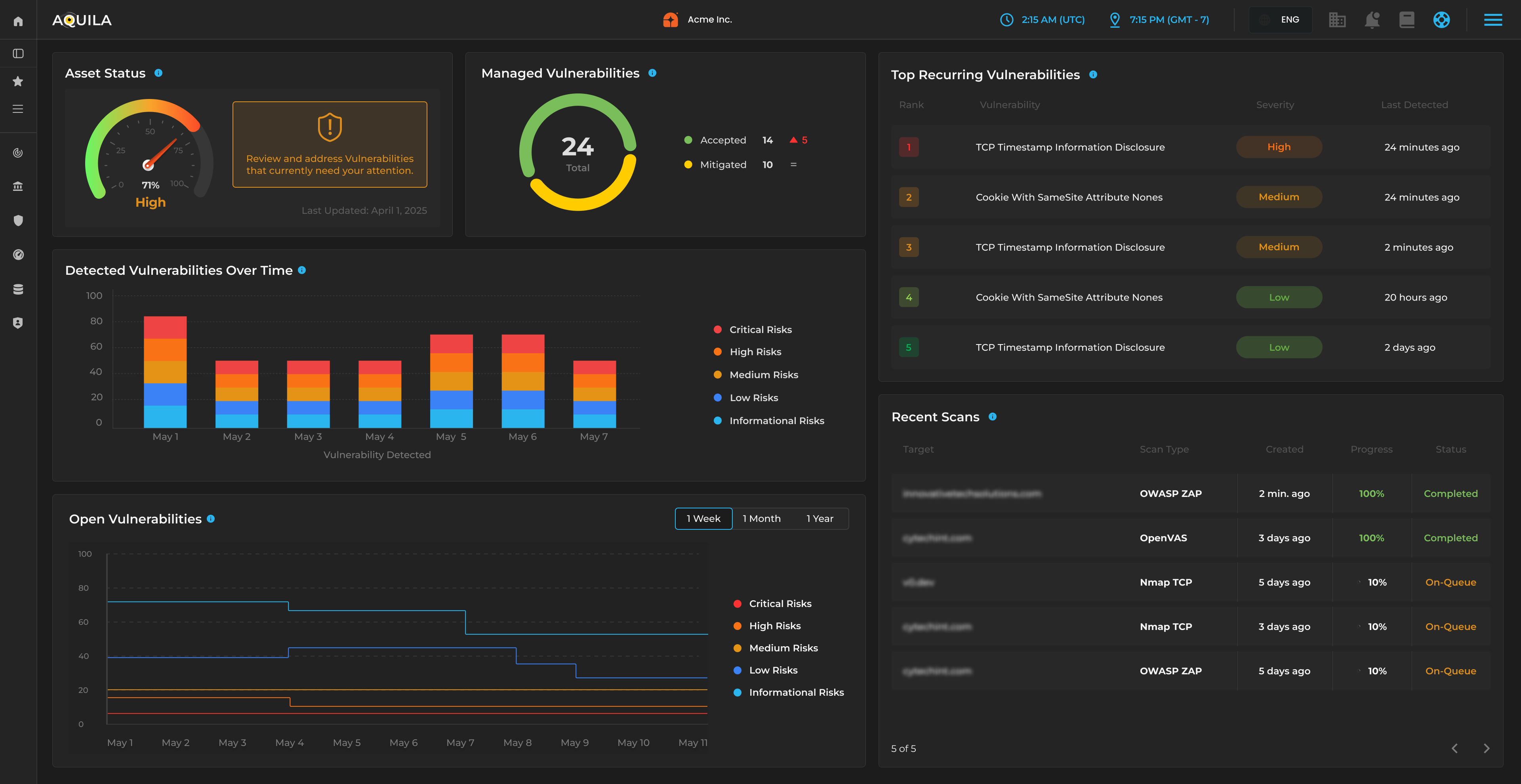
AQUILA’s RBI module isolates web sessions by rendering suspicious or unknown URLs in remote environments, delivering only safe visual output to the endpoint, preventing scripts, payloads, and active content from executing locally, and enforcing isolation policies based on user role, risk level, and governance rules.
This ensures that:
• Malware cannot reach the device
• Phishing pages cannot execute malicious scripts
• Drive‑by exploits cannot trigger
• Browser‑based attacks are neutralized before they begin
Because isolation occurs before content reaches the endpoint, the device remains protected even against unknown or emerging threats.
AQUILA Endpoint Agent applies the C4I pillars directly to web isolation:
Command: Local enforcement of isolation policies based on governance rules, user roles, and risk classification.
Control: Automatic isolation of suspicious URLs, domains, or content types — without user intervention.
Communications: Structured telemetry about web activity, isolation events, and user behavior streamed to AQUILA C4I Core OS.
Computers: Local decision logic determines whether to isolate, block, or allow content based on endpoint posture and behavioral context.
Intelligence: Integration with UEBA, AI‑driven monitoring, and threat intelligence enables adaptive isolation based on real‑time risk signals.
This alignment ensures that RBI is contextual, continuous, and operationally coherent across the endpoint fleet.
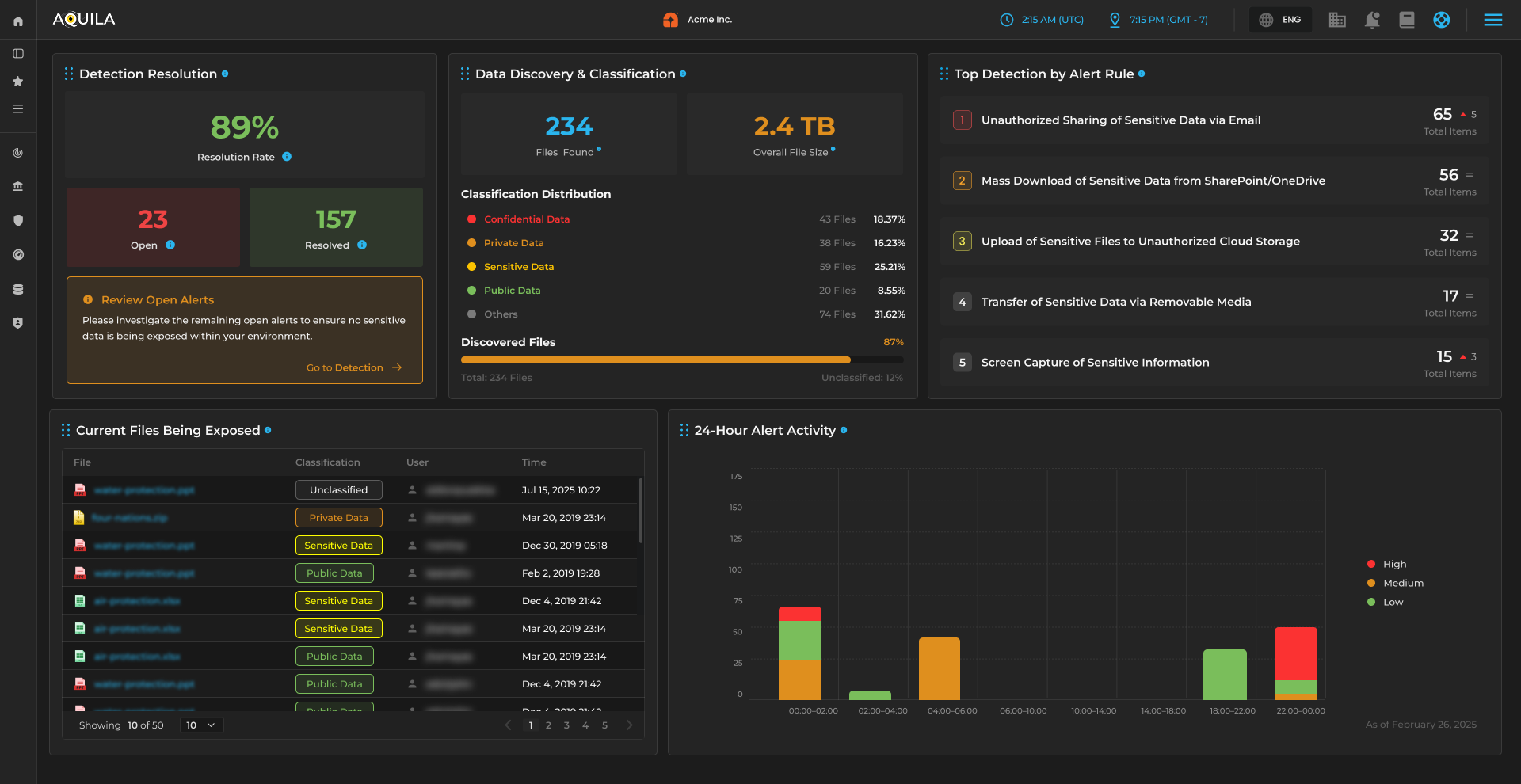
AQUILA RBI shares the same telemetry engine as EDR, VDR, DLP, UEBA, Local SOAR, AI‑driven monitoring, Compliance enforcement, and Asset governance.
This allows RBI to evaluate web activity in the context of:
• User behavior baselines
• Identity signals
• Endpoint configuration
• Vulnerability exposure
• Data movement
• Process execution
• Network activity
Traditional tools cannot correlate isolation decisions with this level of endpoint intelligence.
AQUILA RBI supports full isolation of unknown or high‑risk URLs, selective isolation based on role or policy, adaptive isolation triggered by behavioral anomalies, safe rendering of web content without executing code locally, and seamless user experience with no workflow disruption.
Users interact with web content normally — but the endpoint never touches the active content.
This eliminates:
• Drive‑by malware
• Malicious scripts
• Browser exploit chains
• Credential harvesting attempts
• Phishing‑based payload delivery
RBI becomes a transparent protective layer, not a user burden.
AQUILA RBI leverages UEBA baselines, AI‑driven anomaly detection, identity‑aware context, endpoint posture signals, vulnerability state, and data access patterns.
This enables the system to isolate web sessions when:
• User behavior deviates from baseline
• Identity signals indicate potential compromise
• Endpoint posture indicates elevated risk
• Sensitive data is being accessed
• Suspicious processes are active
• High‑risk vulnerabilities exist on the device
Isolation becomes dynamic, not static.
When RBI detects a high‑risk event, AQUILA can:
• Isolate the device
• Terminate browser processes
• Block outbound connections
• Quarantine downloaded files
• Invalidate user sessions
• Trigger guided remediation
• Escalate to SOC workflows
These actions execute locally, ensuring immediate containment.
RBI becomes both a preventive and responsive capability.
With AQUILA RBI, organizations gain:
1. Zero‑exposure browsing for high‑risk content
Web threats never reach the endpoint.
2. Contextual isolation based on identity and behavior
Isolation decisions incorporate UEBA and AI signals.
3. Unified telemetry for web activity and risk
RBI becomes part of a coherent endpoint architecture.
4. Reduced browser‑based attack surface
Drive‑by exploits and malicious scripts are neutralized.
5. A single source of truth for web isolation events
All activity flows into AQUILA C4I Core OS.